






![Kong Interview Preparation Guide [2025]](https://www.devopstraininginstitute.com/blog/uploads/images/202509/image_430x256_68dbb95326997.jpg)



10 Tools to Automate Incident Alerts
Discover the most effective 10 tools to automate incident alerts and transform your organization's approach to system reliability and downtime management. This comprehensive guide explores industry-leading solutions for automated alerting, on-call scheduling, and incident response orchestration that empower DevOps and SRE teams to reduce mean time to resolution. Learn how these sophisticated platforms leverage artificial intelligence, seamless integrations, and real-time communication to ensure critical infrastructure issues are detected, routed, and resolved before they impact your end-users or business revenue significantly.
Introduction to Incident Alert Automation
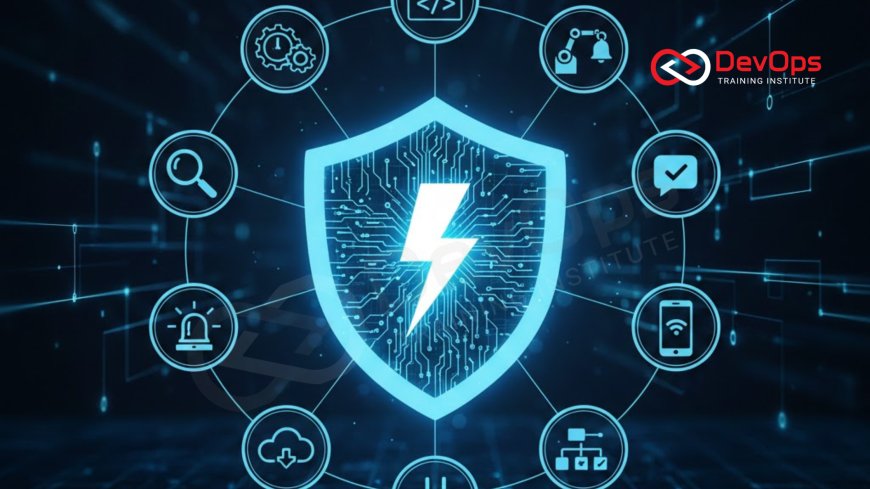
In the high-stakes environment of modern digital services, downtime is not just a technical failure; it is a business crisis that can lead to lost revenue and eroded customer trust. As systems grow more complex with microservices and distributed architectures, the volume of data generated by monitoring systems can become overwhelming. Incident alert automation is the strategic practice of using software to filter this noise, identify genuine crises, and ensure that the right responder is notified instantly through the most effective communication channels available today.
The goal of automating incident alerts is to remove the human delay and potential for error from the initial detection and triage phases of an outage. By implementing sophisticated alerting tools, organizations can move from a reactive state of firefighting to a proactive state of managed response. These tools do more than just send a text message; they coordinate entire teams, create virtual war rooms, and provide the deep technical context needed to solve problems quickly. In this article, we will examine ten essential tools that are redefining how engineering teams stay ahead of infrastructure failures through intelligent automation.
The Critical Role of Alerting in Modern DevOps
Alerting serves as the primary feedback loop for any engineering team responsible for production systems. Without a reliable way to notify staff when things go wrong, even the most advanced monitoring is useless. Automated alerting bridges the gap between detecting an anomaly and beginning the remediation process. It ensures that critical signals are never lost in a sea of non-actionable data, allowing engineers to focus their energy on resolving issues rather than hunting through dashboards during a crisis.
When teams embrace platform engineering, they often build internal developer portals that include standardized alerting configurations as part of the "golden path." This ensure that every new service deployed has professional-grade alerting from day one. By automating the routing and escalation of these alerts, organizations can significantly reduce their mean time to acknowledge (MTTA) and mean time to resolution (MTTR). This systematic approach to reliability is what separates high-performing technology companies from those that struggle with frequent and prolonged service disruptions in their production environments.
Key Features of High-Performing Alerting Tools
Not all alerting tools are created equal, and choosing the right one requires an understanding of the features that actually drive reliability. A professional-grade tool must support multi-channel notifications, including phone calls, SMS, push notifications, and chat integrations like Slack or Microsoft Teams. It must also feature robust on-call scheduling and escalation policies, ensuring that if the first responder is unavailable, the alert automatically moves to a backup contact or a manager without any manual intervention required.
Furthermore, modern tools are increasingly incorporating artificial intelligence and machine learning to perform alert suppression and correlation. This helps in reducing "alert fatigue," a common problem where engineers become desensitized to notifications because they receive too many false alarms. By grouping related alerts into a single incident, these tools provide a clearer picture of the root cause. This level of sophistication is a key part of how observability differs from traditional monitoring, as it focuses on providing actionable insights rather than just raw data points about system health.
Integrating Alerting into the Delivery Pipeline
Automated alerting is not just for production; it is increasingly becoming a part of the continuous integration and delivery process. By integrating alerting tools directly into your deployment pipeline, you can receive immediate notifications if a build fails or if a new deployment causes a spike in error rates. This allows teams to identify and revert problematic changes almost instantly, maintaining a high level of quality and stability even as the pace of software delivery accelerates in competitive markets.
This integration is particularly powerful when combined with a gitops approach, where every infrastructure and application change is driven through version control. If an automated alert detects a failure following a Git push, the system can automatically trigger a rollback or a "fix-forward" action based on predefined rules. This automated safety net allows developers to move faster with more confidence, knowing that the system is constantly being monitored by an intelligent alerting layer that will catch and communicate issues the moment they arise in any environment.
Table: Top 10 Incident Alert Automation Tools
| Tool Name | Best For | Key Automation Feature | Pricing Model |
|---|---|---|---|
| PagerDuty | Enterprise-grade incident orchestration. | AI-driven event orchestration and correlation. | Per user/month (starting ~$21) |
| Zenduty | SRE teams needing deep context and ROI. | Smart alert routing and cross-functional roles. | Free tier available; Paid from $12/user |
| Opsgenie | Teams heavily invested in Atlassian. | Deep integration with Jira Service Management. | Free for 5 users; Paid from $9/user |
| Rootly | Slack-native incident management. | Fully automated Slack workflows and timelines. | Enterprise focus (Contact Sales) |
| Squadcast | Standardizing SRE reliability practices. | Native SLO tracking and maintenance windows. | Free for 5 users; Paid from $9/user |
| Better Stack | Small to medium teams seeking speed. | Unified monitoring and on-call alerting. | Free tier; Paid from $24/month |
| incident.io | Chat-first incident response. | Automated internal and external status updates. | Starting from ~$12/user |
| Splunk On-Call | Observability-heavy Splunk users. | Alert enrichment with runbooks and graphs. | Starts at $10/user/month |
| xMatters | Large enterprises with complex workflows. | No-code visual workflow orchestrations. | Free tier; Advanced via quote |
| BigPanda | AIOps and alert correlation at scale. | Algorithmic event grouping to reduce noise. | Event volume-based (Enterprise) |
Deep Dive into Incident Management Tools
Each of the tools mentioned above offers a unique perspective on how to handle alerts. For instance, PagerDuty and Zenduty are focused on the broad orchestration of the incident lifecycle, from the first alert to the final post-mortem. They excel at gathering data from hundreds of sources and applying complex logic to ensure that a major outage is treated with the urgency it deserves. These platforms are designed for the "mission critical" nature of modern business, providing the reliability that large organizations depend on every single day.
On the other hand, tools like Rootly and incident.io are transforming the responder experience by making Slack the "command center" for incident response. Instead of forcing engineers to switch between multiple tabs and tools during a high-pressure event, these platforms automate the creation of channels, Zoom bridges, and Jira tickets directly from chat. This reduction in "context switching" is a massive boost to developer productivity and helps teams stay focused on the technical resolution rather than administrative overhead. By automating the capture of timelines and messages, they also make the shift left testing of your operational processes much easier to perform through frequent post-incident reviews.
The Financial Impact of Alert Automation
While the primary goal of alerting is reliability, there is a significant financial component to how these tools are implemented. Inefficient alerting can lead to ballooning cloud costs if systems are left running in a degraded state or if resources are over-provisioned to compensate for frequent failures. By providing clear visibility into incident trends and resource utilization, alerting tools support a healthy finops culture where cloud spend is optimized alongside system performance.
Furthermore, the cost of the tools themselves must be weighed against the savings they provide. A single major outage prevented or resolved ten minutes faster can pay for an entire year's subscription to a premium alerting platform. High-performing teams use the analytics provided by these tools to identify recurring "toil" and automate it away. This not only saves on labor costs but also prevents developer burnout, which is an often overlooked but highly significant expense for modern technology companies. Efficient alerting ensures that you are spending your engineering budget on innovation rather than just keeping the lights on in an unstable environment.
Security and Compliance in Alerting Workflows
In today's regulatory environment, how you handle and communicate incidents is often a matter of legal compliance. Automated alerting tools provide the audit trail necessary to prove that your organization follows its defined security procedures. Every alert, acknowledgment, and resolution action is timestamped and logged, providing an irrefutable record for auditors. This is a critical component of how devsecops integrates security into the daily operational fabric of the company.
Additionally, these tools help in managing sensitive incidents that might involve data breaches or security vulnerabilities. Specialized escalation policies can ensure that the legal and security teams are notified alongside the engineers, allowing for a coordinated response that protects both the technology and the company's reputation. By automating the communication with external status pages, these tools also ensure that customers are informed in a timely and transparent manner, which is essential for maintaining trust during a security-related event. Secure and compliant alerting is no longer an option for enterprise companies; it is a foundational requirement.
- Auditability: Comprehensive logs of every notification and response action for compliance reporting.
- Role-Based Access: Ensuring that only authorized personnel can view or acknowledge sensitive security alerts.
- Stakeholder Communication: Automating the flow of information to legal, executive, and customer-facing teams.
- Secure Delivery: Using encrypted channels and HIPAA-compliant messaging where necessary for data protection.
Future Trends: AIOps and Predictive Alerting
As we look toward the future, the integration of artificial intelligence into alerting workflows is set to become the standard. AIOps (Artificial Intelligence for IT Operations) platforms are moving beyond simple noise reduction toward predictive alerting. By analyzing historical patterns, these systems can identify the subtle signs of a coming failure hours before it actually impacts users. This shift from reactive alerting to proactive prevention is the ultimate goal of any site reliability engineering team.
The use of chaos engineering is also being integrated into alerting automation. By deliberately injecting failures into a system, teams can verify that their alerting rules and escalation policies actually work as intended. This "testing of the alerting" ensures that when a real crisis happens, the automation will perform flawlessly. As systems continue to scale and the volume of metrics grows, the reliance on intelligent, self-tuning alerting will only increase. Organizations that invest in these advanced technologies today will be the ones that enjoy the highest levels of uptime and customer satisfaction in the competitive digital landscape of tomorrow.
Conclusion
Automating incident alerts is no longer a luxury for engineering teams; it is a fundamental requirement for operating at scale in the modern world. The 10 tools we have explored represent the absolute best in class for helping organizations detect, route, and resolve infrastructure crises with speed and precision. From the enterprise-grade orchestration of PagerDuty to the chat-native simplicity of Rootly, there is a solution to fit every team's unique culture and technical needs. By investing in these automated alerting platforms, you are doing more than just buying software; you are building a foundation of reliability that protects your revenue, your reputation, and your team's mental health. We have seen how these tools improve observability, support financial governance, and ensure that security is baked into every operational response. As technology continues to evolve, the ability to stay ahead of outages through intelligent automation will remain a primary differentiator for successful businesses. Start by evaluating your current alerting process and see how one of these tools can help you turn your next incident into a managed, well-coordinated success rather than a chaotic disaster.
Frequently Asked Questions
What is the purpose of an incident alerting tool?
An incident alerting tool automatically notifies the correct on-call engineer when a monitoring system detects a critical infrastructure or application failure.
How does PagerDuty help DevOps teams?
PagerDuty orchestrates the incident response process by routing alerts through various channels and escalating them if the primary responder does not acknowledge them.
What is the difference between alerting and monitoring?
Monitoring collects data on system health, while alerting is the active process of notifying a human when that data indicates a critical problem.
What is an escalation policy?
An escalation policy is a set of rules that determines who is notified next if an alert is not acknowledged within a specific timeframe.
Can I integrate alerting with Slack?
Yes, most modern alerting tools have native Slack integrations that allow you to receive, acknowledge, and resolve incidents directly from your chat channels.
How do alerting tools reduce alert fatigue?
They use deduplication and correlation logic to group related notifications into a single incident, preventing engineers from being overwhelmed by repetitive alerts.
What is MTTR and why does it matter?
MTTR stands for Mean Time to Resolution; it measures how long it takes to fix an incident once it has been detected by the system.
Are there free incident alerting tools available?
Yes, tools like Zenduty, Opsgenie, and Better Stack offer free tiers that are suitable for small teams or startup engineering squads.
What is on-call scheduling?
On-call scheduling is the process of defining which team member is responsible for responding to alerts at specific times of the day or week.
How does AI improve incident alerting?
AI can predict potential outages by identifying unusual patterns in system data and suppressing "flappy" alerts that do not require human action.
What is a status page?
A status page is a public or private website that communicates the current health of your services to customers and internal stakeholders.
Can I automate alert routing based on severity?
Yes, you can configure rules to send low-priority alerts to email and high-priority ones via phone calls or SMS to ensure proper focus.
What is a runbook in the context of alerting?
A runbook is a set of documented steps that an engineer should follow to diagnose and resolve a specific type of incident alert.
How do alerting tools handle maintenance windows?
They can be configured to suppress alerts during planned maintenance, preventing false alarms while you are intentionally working on the infrastructure or code.
Does alerting improve software delivery speed?
Yes, by providing immediate feedback on canary releases and production health, it allows teams to deploy changes with much more confidence and safety.
What's Your Reaction?
 Like
0
Like
0
 Dislike
0
Dislike
0
 Love
0
Love
0
 Funny
0
Funny
0
 Angry
0
Angry
0
 Sad
0
Sad
0
 Wow
0
Wow
0

![100+ Azure DevOps Interview Questions and Answers [Updated 2025]](https://www.devopstraininginstitute.com/blog/uploads/images/202509/image_140x98_68c40aa9a3834.jpg)






![Future Scope of DevOps Careers in Pune [Updated 2025]](https://www.devopstraininginstitute.com/blog/uploads/images/202510/image_140x98_68e3a84652312.jpg)