


































![Kong Interview Preparation Guide [2025]](https://www.devopstraininginstitute.com/blog/uploads/images/202509/image_430x256_68dbb95326997.jpg)
















12 Kubernetes Observability Tools for Better Insights
Unlock deep insights into your containerized infrastructure with our comprehensive guide to the twelve best Kubernetes observability tools for twenty twenty six. As clusters grow in complexity, understanding the relationship between metrics, logs, and traces becomes essential for maintaining high availability and performance. This expert analysis covers everything from open source legends like Prometheus and Grafana to cutting edge AI driven platforms that automate root cause analysis. Learn how to implement effective monitoring strategies, optimize resource allocation, and ensure your DevOps team has the visibility needed to resolve incidents faster than ever before. Stay ahead of the curve by mastering the observability stack that defines modern engineering excellence.
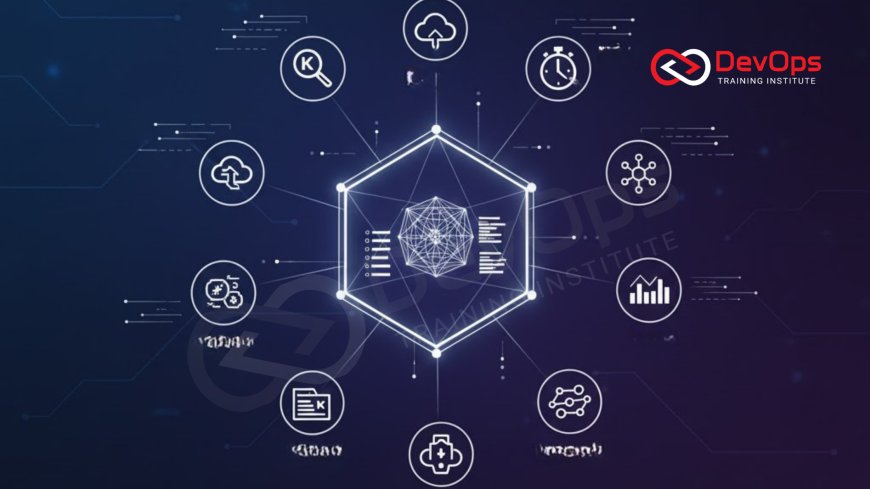
Introduction to Kubernetes Observability
In the fast paced world of cloud native computing, Kubernetes has become the standard for orchestrating containerized applications at scale. However, the dynamic nature of these environments introduces significant challenges when it comes to understanding system behavior and performance. Traditional monitoring is no longer enough; teams now require a complete observability framework that encompasses metrics, logs, and distributed traces. This holistic approach allows engineers to move beyond knowing that a problem exists to understanding exactly why it occurred within the complex web of microservices and ephemeral pods.
Effective observability in Kubernetes provides the visibility needed to maintain stable production environments and deliver high quality software consistently. By capturing detailed telemetry data from every layer of the stack, from the physical hardware to the individual application code, teams can identify bottlenecks and optimize resource usage in real time. As we move further into twenty twenty six, the integration of artificial intelligence and automated diagnostics is making these tools more powerful than ever. Mastering these insights is the key to achieving the operational excellence required by modern digital businesses operating on a global scale.
The Role of Metrics and Time Series Data
Metrics serve as the heartbeat of any Kubernetes cluster, providing quantitative data about resource utilization, request rates, and error frequencies. Tools focused on metrics collection allow operators to visualize trends over time and set up alerts that trigger when certain thresholds are crossed. This data is essential for capacity planning and ensuring that your architecture patterns are scaling correctly to meet user demand. Without reliable metrics, it is nearly impossible to make informed decisions about cluster rightsizing or performance tuning during peak traffic periods.
One of the most powerful aspects of modern metrics tools is their ability to handle high cardinality data, allowing for granular analysis across different namespaces, nodes, and service versions. This level of detail is vital for troubleshooting specific issues that may only affect a small subset of your users or a particular region. By correlating these metrics with other telemetry signals, engineers can gain a much deeper understanding of how different components interact. This data driven approach is fundamental to the cultural change required for successful DevOps adoption where every decision is backed by solid evidence from the production environment.
Mastering Logs for Detailed Debugging
While metrics tell you that something is wrong, logs provide the specific details needed to fix it. In a Kubernetes environment, logs are generated by the container runtime, the application itself, and the various control plane components. Centralizing these logs is critical because pods are ephemeral; once a pod is deleted, its local logs are lost forever. Modern logging tools index and store this data in a way that allows for fast full text searches and complex filtering, making it possible to trace the sequence of events leading up to a failure across multiple services.
Advanced logging solutions also offer features like log aggregation and automated pattern recognition to help identify recurring issues and security threats. By integrating these tools into your incident handling workflow, you can significantly reduce the time spent on manual investigation. Furthermore, using logs to track cluster states helps in auditing changes and ensuring that the actual state of the environment matches your desired configuration. This deep level of visibility is essential for maintaining a secure and stable infrastructure that can withstand the rigors of modern software delivery at high velocity.
Distributed Tracing for Microservices
In a microservices architecture, a single user request might travel through dozens of different services before returning a response. Distributed tracing is the only way to visualize this journey and identify where latency or errors are being introduced. By assigning a unique trace ID to each request, these tools allow you to see the exact path and timing of every interaction. This is invaluable for pinpointing slow database queries, inefficient network calls, or service dependencies that are causing bottlenecks in your overall application performance.
Implementing distributed tracing often involves instrumenting your application code or using a service mesh to automatically capture the necessary data. This provides a clear picture of service dependencies and helps teams understand the ripple effects of a failure in one component. As organizations move toward more complex AI augmented devops toolchains, tracing data becomes a primary source for training automated remediation systems. It bridges the gap between individual service monitoring and end to end user experience, ensuring that every request is handled as efficiently as possible across the entire distributed system.
Top Kubernetes Observability Tools Comparison
| Tool Name | Primary Telemetry | Best Feature | License Model |
|---|---|---|---|
| Prometheus | Metrics | Powerful Query Language | Open Source |
| Grafana | Visualization | Unified Dashboards | Open Source / SaaS |
| Jaeger | Traces | Dependency Mapping | Open Source |
| Loki | Logs | Cost Effective Indexing | Open Source |
| Datadog | Full Stack | 700+ Integrations | Proprietary SaaS |
Open Source Ecosystem Leaders
The open source community has built an incredible array of tools that form the backbone of Kubernetes observability for many organizations. Prometheus is the industry standard for metrics collection, offering a robust pull based model and the powerful PromQL query language. It is often paired with Grafana, which provides world class visualization and the ability to combine data from multiple sources into a single, beautiful dashboard. Together, these tools offer a level of flexibility and control that is hard to match with proprietary solutions, making them a favorite for teams with high DevOps maturity.
Other notable open source projects include Jaeger for tracing and Fluentd or Loki for logging. Using these tools allows organizations to avoid vendor lock in and tailor their observability stack to their specific technical needs. Many of these projects are part of the Cloud Native Computing Foundation, ensuring long term support and a vibrant community of contributors. By following GitOps principles, you can manage the configuration of these tools as code, ensuring that your monitoring setup is as reproducible and versioned as your application infrastructure itself.
Enterprise SaaS Solutions for Scale
For large organizations that prefer a managed experience with out of the box automation, enterprise SaaS platforms like Datadog, New Relic, and Dynatrace offer comprehensive observability suites. These tools provide unified visibility across the entire stack, automatically correlating logs, metrics, and traces without manual intervention. They often include advanced features like AI powered anomaly detection and automated root cause analysis, which can significantly reduce the cognitive load on engineering teams. This allows your developers to focus on building features rather than managing complex observability pipelines.
These platforms excel at providing high level business insights and security monitoring alongside traditional technical telemetry. They are designed to handle the scale and complexity of global enterprises, with robust support for hybrid and multi cloud environments. While they come with a higher price tag, the savings in operational toil and faster resolution of critical incidents often justify the investment. Integrating admission controllers with these tools ensures that every new service launched in your cluster is automatically instrumented and monitored according to your organization's internal standards.
Essential Tools for Your Observability Stack
- Prometheus: The leading tool for metrics collection and alerting in containerized environments.
- Grafana: An open source visualization platform that brings all your telemetry data into interactive dashboards.
- Jaeger: A distributed tracing system used for monitoring and troubleshooting complex microservices interactions.
- Loki: A horizontally scalable, highly available, multi tenant log aggregation system inspired by Prometheus.
- OpenTelemetry: A vendor neutral framework for instrumenting, generating, and exporting telemetry data across the cloud.
- Elasticsearch: A powerful search and analytics engine often used as the backend for large scale logging operations.
- Dynatrace: An AI driven platform that provides full stack observability with automated root cause analysis capabilities.
- Sysdig: Focuses on combining deep container visibility with cloud native security and compliance monitoring features.
- New Relic: A comprehensive SaaS platform that offers deep application performance monitoring and full stack insights.
- Thanos: Extends Prometheus by providing long term storage and a global query view across multiple clusters.
- Kube-state-metrics: A simple service that listens to the Kubernetes API and generates metrics about the state of objects.
- Pixie: Uses eBPF to provide automatic, high resolution visibility into your Kubernetes applications without manual instrumentation.
Choosing the right combination of these tools depends on your specific performance requirements and team expertise. Some organizations find success with a purely open source stack, while others benefit from the automation and support of a managed platform. The key is to ensure that your tools provide continuous verification of system health throughout the entire development lifecycle. By selecting the right containerd runtime and monitoring it closely, you can maintain peak efficiency and reliability for all your containerized workloads in the cloud.
Conclusion: Building a Culture of Visibility
In conclusion, achieving deep insights into Kubernetes requires more than just installing a few tools; it requires a strategic approach to observability that unifies metrics, logs, and traces. Whether you choose the flexibility of open source legends or the power of enterprise SaaS platforms, the goal remains the same: to understand your system so well that you can predict and prevent issues before they impact your users. As technology continues to evolve, the integration of continuous verification and AI will only further enhance our ability to manage the complexity of modern cloud native applications.
Ultimately, the best observability stack is one that empowers your engineers to innovate with confidence, knowing they have the visibility to catch and fix problems quickly. By embracing these twelve essential tools, you are setting your organization up for success in an increasingly competitive digital landscape. As you refine your release strategies and grow your infrastructure, let data be your guide. The future of Kubernetes is bright for those who prioritize visibility and use it to drive continuous improvement across their entire technical organization, ensuring long term stability and peak performance for every service they deliver.
Frequently Asked Questions
What is the difference between monitoring and observability in Kubernetes?
Monitoring focuses on knowing if a system is healthy, while observability is about understanding why a system is behaving in a specific way.
Why is Prometheus so popular for Kubernetes monitoring?
It is popular because of its native support for Kubernetes, powerful query language, and highly efficient time series database for metric storage.
Do I need distributed tracing if I have logs and metrics?
Yes, because tracing is the only way to visualize request journeys across multiple services, which metrics and logs cannot easily show.
How does Grafana improve the observability experience?
Grafana allows you to build beautiful, unified dashboards that aggregate data from multiple different sources, making it easier to spot trends and issues.
Is it better to use open source or proprietary tools?
Open source offers more control and cost savings, while proprietary tools provide advanced automation and a managed experience with less operational overhead.
What role does eBPF play in modern observability?
eBPF allows for high resolution visibility into system performance without requiring manual instrumentation of your application code or container images.
How can I manage observability costs in a large cluster?
Focus on sampling traces, using cost effective log indexing like Loki, and setting strict retention policies for your telemetry data.
What is the purpose of kube-state-metrics?
It generates metrics about the state of Kubernetes objects like deployments and pods, helping you understand the overall health of your cluster.
Can observability tools help with Kubernetes security?
Yes, by monitoring network traffic patterns and system calls, these tools can detect anomalies that may indicate a security breach or vulnerability.
What is OpenTelemetry and why does it matter?
It is a standard framework for collecting telemetry data, ensuring that your instrumentation is vendor neutral and can work with various monitoring platforms.
How often should I review my observability dashboards?
Dashboards should be reviewed regularly during daily standups and after every major release to ensure that the system is performing as expected.
Does observability impact the performance of my application?
While instrumentation adds some overhead, modern tools are designed to be extremely lightweight and minimize the impact on your production services.
How do I handle logs from ephemeral pods?
You must use a centralized logging system that scrapes and stores logs externally so they are available even after the pods are deleted.
What are SLIs and SLOs in the context of observability?
SLIs are specific metrics that measure service level, while SLOs are the target values for those metrics that define acceptable system performance.
Can I automate incident response using observability data?
Yes, by integrating your monitoring tools with automation platforms, you can trigger self healing actions like restarting pods or scaling resources automatically.
What's Your Reaction?
 Like
0
Like
0
 Dislike
0
Dislike
0
 Love
0
Love
0
 Funny
0
Funny
0
 Angry
0
Angry
0
 Sad
0
Sad
0
 Wow
0
Wow
0

![100+ Azure DevOps Interview Questions and Answers [Updated 2025]](https://www.devopstraininginstitute.com/blog/uploads/images/202509/image_140x98_68c40aa9a3834.jpg)






![Future Scope of DevOps Careers in Pune [Updated 2025]](https://www.devopstraininginstitute.com/blog/uploads/images/202510/image_140x98_68e3a84652312.jpg)


