









![Kong Interview Preparation Guide [2025]](https://www.devopstraininginstitute.com/blog/uploads/images/202509/image_430x256_68dbb95326997.jpg)








15 Kubernetes Networking Tools for Cloud-Native Apps
Navigate the complex world of container communication with our expert guide on fifteen essential Kubernetes networking tools for cloud native applications in twenty twenty six. This comprehensive analysis covers service meshes, ingress controllers, network policy engines, and CNI plugins that ensure high performance and secure connectivity for your microservices. Learn how to optimize traffic flow, implement zero trust security, and enhance observability within your clusters. Whether you are building at scale or just starting your cloud journey, these technical insights will help you choose the right networking stack to drive reliability and efficiency across your entire modern infrastructure today.
Introduction to the Kubernetes Networking Ecosystem
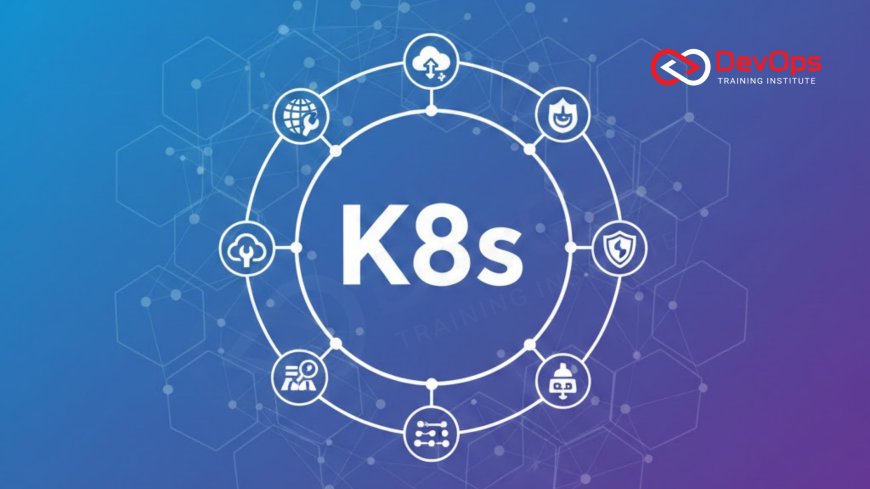
In the realm of container orchestration, networking is often considered the most challenging yet critical component to master. Kubernetes networking is built on a flat network model that allows every pod to communicate with every other pod across the cluster without the need for complex network address translation. As applications grow in complexity and scale, the standard networking features provided by Kubernetes often require enhancement through specialized tools and plugins. These tools are designed to handle everything from low level packet routing to high level service to service security and observability in a distributed environment.
The choice of networking tools significantly impacts the performance, security, and manageability of your cloud native applications. In twenty twenty six, the trend is moving toward more intelligent and automated networking solutions that leverage technologies like eBPF and advanced service mesh architectures. By selecting the right combination of tools, DevOps teams can ensure that their applications are not only connected but also resilient against failures and protected from internal and external threats. Understanding the landscape of these fifteen essential tools is the first step toward building a robust and scalable infrastructure that supports modern business requirements.
The Foundation: Container Network Interface (CNI) Plugins
The Container Network Interface is the standard that defines how network interfaces should be configured for containers. CNI plugins are the fundamental tools that manage the actual wiring of the network, ensuring that pods receive IP addresses and can reach one another across different nodes. Popular plugins like Flannel and Calico have been industry staples for years. Flannel is known for its simplicity and ease of use, making it an excellent choice for beginners, while Calico offers advanced features like fine grained network policies and BGP support for high performance enterprise environments.
Choosing the right CNI is a critical decision that influences the long term scalability of your cluster. For teams looking for cutting edge performance and deep visibility, Cilium has emerged as a top contender by utilizing eBPF technology to bypass traditional Linux networking bottlenecks. This allows for more efficient packet processing and built in security at the kernel level. Integrating these CNI choices into your continuous synchronization workflows ensures that your network layer remains consistent as you scale your infrastructure across different cloud providers or on premises data centers. It is the bedrock upon which all other networking layers are built.
Advanced Traffic Management with Ingress Controllers
While CNI plugins handle internal cluster communication, Ingress controllers are responsible for managing how external traffic enters your cluster. They act as a sophisticated gateway, providing features like load balancing, SSL termination, and path based routing. NGINX Ingress is perhaps the most widely used tool in this category, offering a familiar configuration language and high reliability. However, other tools like Traefik and Kong have gained popularity for their native support for dynamic configuration and specialized features like API management and middleware integration for complex modern web applications.
Modern Ingress controllers are increasingly designed to handle the dynamic nature of cloud native environments. They can automatically discover new services as they are deployed and adjust routing rules in real time without manual intervention. This level of automation is essential for maintaining release strategies that involve frequent updates and blue green deployments. By centralizing traffic management at the Ingress layer, you can enforce global security policies and performance optimizations that benefit every application running within the cluster. This architectural pattern reduces the complexity of individual microservices and provides a unified point of control for your external facing technical services.
The Power of Service Mesh for Microservices
As microservices architectures become more granular, the number of internal service to service interactions grows exponentially. A service mesh like Istio or Linkerd provides a dedicated infrastructure layer to manage these communications. It adds a "sidecar" proxy to every pod, which handles tasks like service discovery, load balancing, encryption, and observability. This allows developers to focus on business logic while the mesh handles the complexities of secure and reliable communication. Using a service mesh is a major step in driving cultural change within engineering teams, as it standardizes how services talk to one another.
Beyond simple connectivity, a service mesh offers advanced features like traffic splitting, circuit breaking, and distributed tracing. These capabilities are vital for identifying bottlenecks and preventing cascading failures in a large scale distributed system. For instance, you can use Istio to perform a canary release by sending only five percent of traffic to a new version of a service. This level of control, combined with ChatOps techniques, allows for rapid response and visibility during production changes. While a service mesh adds some operational overhead, the benefits in terms of security and observability often outweigh the costs for complex, high stakes production environments.
Top 15 Kubernetes Networking Tools Comparison
| Tool Category | Popular Tools | Primary Use Case | Complexity |
|---|---|---|---|
| CNI Plugin | Calico, Cilium, Flannel | Pod-to-pod connectivity | Medium |
| Ingress Controller | NGINX, Traefik, Emissary | External traffic gateway | Medium |
| Service Mesh | Istio, Linkerd, Consul | Service-to-service communication | High |
| Load Balancer | MetalLB, Kube-vip | On-premise IP management | Low |
| Policy Engine | OPA, Kyverno | Network security enforcement | Medium |
Implementing Zero-Trust Security at the Network Layer
Security is no longer something that can be applied only at the edge of the network; it must be baked into the fabric of the cluster. Tools like Calico and Cilium allow you to implement the principle of least privilege through automated network policies. These policies act as a distributed firewall, allowing you to explicitly define which pods are allowed to talk to each other and on which ports. This prevents an attacker who compromises a single microservice from moving laterally through your network to reach sensitive data stores. It is a fundamental component of admission controllers and overall cluster hardening.
To further enhance security, tools like OPA Gatekeeper can be used to enforce networking best practices at the time of deployment. For example, you can create a policy that rejects any Ingress resource that doesn't use HTTPS or prevents pods from being created without a corresponding network policy. This proactive approach to security ensures that your cluster states are always compliant with organizational standards. By combining these policy engines with secret scanning tools, you can ensure that your networking configuration is both secure and free from accidentally exposed credentials. It is about creating a defense in depth strategy that protects your applications at every layer.
Networking Solutions for On-Premise and Hybrid Clouds
While cloud providers offer managed load balancers, organizations running Kubernetes on premises often face the challenge of how to expose services to the outside world. Tools like MetalLB and Kube-vip solve this problem by providing a network load balancer implementation for bare metal clusters. These tools allow you to assign external IP addresses to your services just as you would in a public cloud environment. This is essential for maintaining parity between your development and production environments, especially when following GitOps practices to manage your infrastructure as code.
In hybrid cloud scenarios, tools like Submariner enable direct pod to pod connectivity across different clusters and different cloud regions. This allows for more complex architecture patterns where a single application might span multiple geographic locations for better availability or data residency compliance. Managing networking in these environments requires a deep understanding of routing and latency. By using these specialized tools, you can hide the complexity of the underlying physical network and provide a unified, virtualized networking experience for your developers, allowing them to focus on building features rather than worrying about cross cluster routing hurdles.
Essential Kubernetes Networking Tool List
- Cilium: An eBPF based CNI that provides high performance networking, advanced security, and deep observability features for modern clusters.
- Istio: The most comprehensive service mesh platform, offering advanced traffic management, security, and observability for complex microservices.
- Traefik: A cloud native Ingress controller and edge router that integrates seamlessly with your existing infrastructure for automatic configuration.
- Calico: A widely trusted CNI known for its robust network policy enforcement and flexible routing options across various cloud and on-premise environments.
- MetalLB: A crucial tool for bare metal clusters that provides a network load balancer implementation, allowing services to have external IPs.
- Linkerd: A lightweight and security focused service mesh that is easy to install and provides immediate observability and mutual TLS for all services.
- Kong Ingress: Built on the popular Kong Gateway, this tool provides advanced API management features alongside standard Kubernetes Ingress capabilities.
- Flannel: A simple and mature CNI plugin that is ideal for small clusters or teams just starting their Kubernetes journey and needing basic pod connectivity.
- Kube-router: A lean alternative to standard networking that provides a distributed load balancer, firewall, and service proxy in a single tool.
- Project Contour: An Ingress controller for Kubernetes that uses Envoy as a high performance proxy to manage external traffic with ease.
- Antrea: A CNI plugin based on Open vSwitch that provides high performance networking and security specifically optimized for VMware and private cloud environments.
- Submariner: A tool that enables direct communication between pods and services in different Kubernetes clusters, supporting multi cluster and hybrid cloud deployments.
- Emissary-ingress: An open source API Gateway and Ingress controller built on Envoy that focuses on ease of use for development teams.
- BGP-Control-Plane: Not a single tool but a set of practices often implemented with Calico to integrate Kubernetes networking with physical enterprise routers.
- Continuous Verification: While a practice, using continuous verification tools ensures your networking configuration meets performance and safety targets in real time.
Integrating these tools into your environment should be done thoughtfully, starting with the core CNI and gradually adding layers like Ingress and service mesh as your needs evolve. It is also important to consider the underlying containerd or container runtime, as some networking features may rely on specific container capabilities. Keeping your networking stack up to date with the latest release strategies will ensure that you have access to the most recent security patches and performance improvements. The goal is to create a networking layer that is invisible to the end user but powerful and flexible for the engineering team managing the platform.
Conclusion: Building a Resilient Network Fabric
In conclusion, the fifteen Kubernetes networking tools discussed in this guide provide the essential building blocks for a secure, scalable, and high performance cloud native environment. From the foundational connectivity of CNI plugins to the advanced management provided by service meshes and Ingress controllers, these tools empower DevOps teams to handle the most demanding workloads with confidence. By prioritizing automation, security, and observability in your networking choices, you can build a resilient infrastructure that supports the rapid growth and innovation required in today's digital landscape. The journey to a perfect network is ongoing, but with these tools, you are well equipped for success.
As we look toward the future, the integration of AI augmented devops will likely bring even more sophisticated automation to how we manage and troubleshoot our networks. Proactive performance tuning and automated threat detection will become standard features of the networking stack. By staying informed about the latest trends and best practices, you can ensure that your organization remains competitive and secure. Embrace these tools today to transform your Kubernetes networking into a powerful asset that drives efficiency and reliability across your entire software delivery pipeline and global application footprint.
Frequently Asked Questions
What is the difference between a CNI and an Ingress Controller?
A CNI handles internal communication between pods within the cluster, while an Ingress Controller manages how external traffic enters the cluster services.
Do I always need a service mesh for my Kubernetes cluster?
No, a service mesh is best for complex microservices architectures that require advanced traffic control, security, and deep observability between services.
Why is Cilium gaining popularity in the Kubernetes community?
Cilium uses eBPF technology to provide high performance networking and security at the kernel level, making it highly efficient for modern clusters.
Can I use multiple CNI plugins in a single cluster?
While technically possible through tools like Multus, it is complex and usually only recommended for specialized use cases requiring multiple interfaces per pod.
What is the role of MetalLB in on-premise Kubernetes?
MetalLB provides a network load balancer implementation for bare metal clusters, allowing services to be exposed via external IP addresses without a cloud provider.
How does a service mesh improve security between pods?
A service mesh can automatically encrypt all traffic between pods using mutual TLS, ensuring that internal communication remains private and secure by default.
What is an Ingress resource in Kubernetes terms?
An Ingress resource is an API object that defines rules for external access to services, typically via HTTP or HTTPS paths and hostnames.
Is NGINX still the best choice for an Ingress Controller?
NGINX remains a very reliable and popular choice, but Traefik and Kong are often preferred for their native cloud features and API management.
How can I monitor the performance of my Kubernetes network?
Use tools like Prometheus and Grafana along with CNI specific metrics to track packet loss, latency, and overall traffic flow in your cluster.
What are Kubernetes Network Policies used for?
Network Policies are like a firewall for pods, allowing you to specify exactly which pods can communicate with each other and on what ports.
Does the choice of CNI affect the speed of my applications?
Yes, different CNI plugins have different overheads; eBPF based solutions like Cilium generally offer better performance than traditional overlay network plugins like Flannel.
What is eBPF and why does it matter for networking?
eBPF is a technology that allows running sandboxed programs in the Linux kernel, enabling extremely fast and safe networking and observability operations without overhead.
How do I choose the right networking tool for my team?
Start with your specific requirements for security, performance, and cloud environment, then test a few tools in a staging cluster to find the best fit.
Can networking tools help with multi-region Kubernetes deployments?
Yes, tools like Submariner and certain service mesh configurations are designed specifically to connect and manage networking across multiple clusters and geographic regions.
What is the "flat network" model in Kubernetes networking?
The flat network model means every pod can reach every other pod without NAT, which simplifies communication but requires robust network policy enforcement for security.
What's Your Reaction?
 Like
0
Like
0
 Dislike
0
Dislike
0
 Love
0
Love
0
 Funny
0
Funny
0
 Angry
0
Angry
0
 Sad
0
Sad
0
 Wow
0
Wow
0


![100+ Azure DevOps Interview Questions and Answers [Updated 2025]](https://www.devopstraininginstitute.com/blog/uploads/images/202509/image_140x98_68c40aa9a3834.jpg)






![Future Scope of DevOps Careers in Pune [Updated 2025]](https://www.devopstraininginstitute.com/blog/uploads/images/202510/image_140x98_68e3a84652312.jpg)