

![Kong Interview Preparation Guide [2025]](https://www.devopstraininginstitute.com/blog/uploads/images/202509/image_430x256_68dbb95326997.jpg)

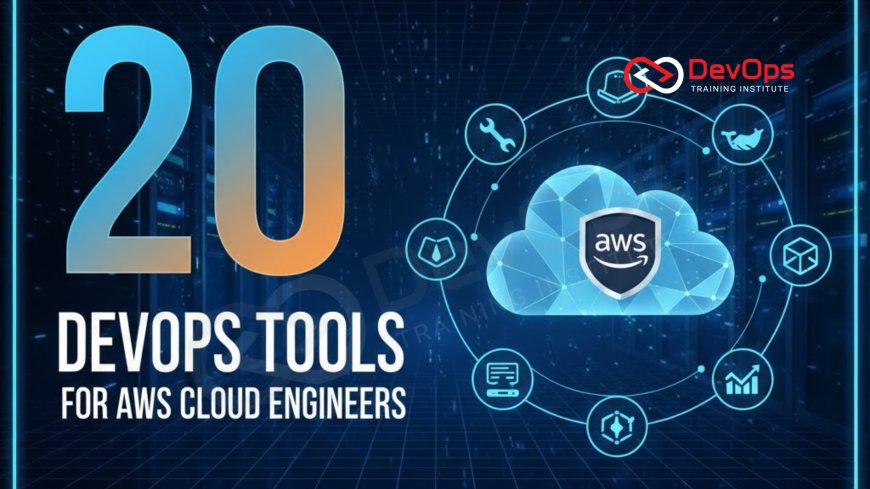
Top 20 DevOps Tools for AWS Cloud Engineers
In the evolving landscape of cloud computing, mastering the right set of utilities is essential for any professional aiming to excel in modern infrastructure management. This comprehensive guide explores the top twenty DevOps tools for AWS cloud engineers, highlighting how these powerful solutions streamline automation, enhance security, and accelerate deployment cycles. By understanding the core functionalities of each tool, from infrastructure as code to continuous monitoring, you can build a more resilient and efficient delivery pipeline that effectively supports your organization's digital transformation goals and operational excellence in 2025.
Introduction to DevOps in the AWS Ecosystem
The role of a cloud engineer has transformed significantly over the last few years, moving away from manual server configurations toward a world driven by code and automation. Within the Amazon Web Services environment, the sheer volume of available services can be overwhelming for beginners. However, the core philosophy remains the same: to deliver high quality software at high speed while maintaining absolute stability and security across all environments.
To succeed in this landscape, engineers must move beyond basic cloud knowledge and master a specialized toolkit designed for the DevOps methodology. These tools act as the bridge between development and operations, ensuring that code moves from a developer's machine to the production environment with minimal friction. By focusing on the right set of utilities, you can ensure your cloud architecture is robust, scalable, and fully automated to meet modern business demands.
Infrastructure as Code and Provisioning Tools
Infrastructure as Code, or IaC, is the practice of managing and provisioning your cloud resources through machine readable files rather than manual console clicks. This is perhaps the most critical skill for any AWS DevOps professional. It allows teams to version their infrastructure just like application code, making it easy to replicate environments for testing or disaster recovery purposes. When your infrastructure is defined as code, you eliminate the risk of configuration drift and human error.
The two primary heavyweights in this space are AWS CloudFormation and Terraform. CloudFormation is the native AWS service that uses YAML or JSON templates to describe your resources, while Terraform is a popular open source alternative that uses the HashiCorp Configuration Language. Both tools allow you to create complex stacks of resources including virtual private clouds, load balancers, and database instances in a repeatable and predictable manner, which is essential for maintaining a healthy and agile development cycle.
Essential Tools for Continuous Integration and Delivery
Continuous Integration and Continuous Delivery represent the heartbeat of any DevOps pipeline. These processes ensure that code changes are automatically tested and prepared for release as soon as they are committed to a repository. In the AWS world, several tools stand out for their ability to orchestrate these workflows. Utilizing a strong CI/CD strategy is one of the most effective ways to enable faster releases without compromising on the quality of the final product.
- AWS CodePipeline: A fully managed continuous delivery service that helps you automate your release pipelines for fast and reliable updates.
- Jenkins: An incredibly flexible and extensible open source automation server that integrates with almost every tool in the AWS ecosystem.
- AWS CodeBuild: A fully managed build service that compiles source code, runs tests, and produces software packages that are ready to deploy.
- GitHub Actions: A powerful automation platform built directly into GitHub that allows you to trigger workflows based on repository events.
- GitLab CI/CD: An all in one tool that provides a seamless interface for managing source code and automated pipelines in a single location.
Each of these tools offers unique advantages depending on the size of your team and the complexity of your application. While AWS native services offer deep integration with the platform, third party tools like Jenkins provide a level of customization that is often necessary for legacy systems or hybrid cloud environments. The goal is always to create a smooth, automated path from code commit to production deployment.
Containerization and Orchestration Technologies
Containers have revolutionized how we package and deploy applications by providing a consistent environment regardless of where the code is running. Docker remains the industry standard for creating these lightweight packages, ensuring that your application behaves the same way on a developer's laptop as it does on a production server. For AWS engineers, understanding how to manage these containers at scale is a non negotiable requirement for modern cloud roles.
Once you have containerized your applications, you need a way to manage them across a cluster of servers, which is where orchestration comes into play. Amazon Elastic Kubernetes Service and Amazon Elastic Container Service are the two main options for this. These platforms handle the heavy lifting of scaling, patching, and load balancing your containers. They ensure that your microservices remain highly available and can handle fluctuating traffic demands without manual intervention from the engineering team.
Comparison of Native AWS vs. Third Party DevOps Tools
| Category | AWS Native Tool | Third Party Alternative |
|---|---|---|
| Infrastructure as Code | AWS CloudFormation | HashiCorp Terraform |
| CI/CD Orchestration | AWS CodePipeline | Jenkins / GitLab CI |
| Container Orchestration | Amazon ECS | Kubernetes (managed via EKS) |
| Configuration Management | AWS OpsWorks | Ansible / Chef / Puppet |
| Monitoring & Logging | Amazon CloudWatch | Datadog / Prometheus |
Monitoring and Observability for Cloud Health
In a distributed cloud environment, knowing exactly what is happening inside your systems is vital for maintaining performance and reliability. Monitoring involves collecting metrics like CPU usage and memory, while observability goes a step further by providing deep insights into the internal state of your applications through logs and traces. Without these tools, troubleshooting a complex issue in a production environment becomes an impossible task of guesswork.
Amazon CloudWatch is the foundational tool for monitoring AWS resources, providing a centralized dashboard for metrics and logs. However, many teams also adopt third party solutions like Datadog or New Relic for more advanced analytics and cross cloud visibility. These tools allow you to set up sophisticated alerts that notify the team immediately when something goes wrong, often integrating with communication platforms via incident handling workflows to ensure rapid response and resolution.
Automating Security and Compliance
Security should never be an afterthought in the cloud; instead, it must be integrated directly into the development lifecycle through a practice known as DevSecOps. This involves using automated tools to scan for vulnerabilities, manage identities, and ensure that your infrastructure complies with industry regulations. By automating these checks, you can catch potential security holes before they ever reach production, protecting both your company and your users.
AWS offers a suite of powerful security tools such as AWS Identity and Access Management for fine grained permissions and AWS Secrets Manager for protecting sensitive data. Additionally, incorporating secret scanning into your code repositories is a critical step in preventing accidental data leaks. These automated processes provide a layer of protection that manual reviews simply cannot match, allowing your team to move quickly with the confidence that the environment remains secure.
Innovative Trends in the DevOps Toolchain
The field of DevOps is constantly evolving as new technologies and methodologies emerge to solve complex infrastructure problems. One of the most significant recent shifts is the rise of GitOps, which uses Git as the single source of truth for both application code and infrastructure configuration. Understanding how GitOps works is becoming increasingly important for engineers working with Kubernetes, as it simplifies the process of keeping clusters in sync with their desired state.
Furthermore, the integration of artificial intelligence into the development process is opening up new possibilities for automation and efficiency. Keeping an eye on emerging trends like AI augmented toolchains can give you a competitive edge by helping you identify issues faster and optimize your resource usage automatically. Staying curious and constantly updating your skills is the only way to remain relevant in a field that moves as quickly as cloud engineering.
Conclusion and Future Outlook
The success of a DevOps strategy in the AWS cloud depends on choosing the right tools that align with your team's goals and technical capabilities. From the initial provisioning of resources with IaC to the final stages of monitoring and security, each tool in the top twenty plays a specific and vital role in the delivery pipeline. While the sheer variety of options may seem daunting, focusing on a core set of reliable utilities will help you build a solid foundation for your cloud career.
As we look toward the future, the boundary between development and operations will continue to blur, making these tools more integrated and intuitive than ever before. Whether you are just starting your journey as an AWS cloud engineer or you are a seasoned professional looking to refine your stack, the key is to embrace automation and continuous learning. By mastering these essential DevOps tools, you will be well equipped to handle any challenge that comes your way in the dynamic world of cloud technology.
Frequently Asked Questions
What is the best infrastructure as code tool for AWS?
Both Terraform and AWS CloudFormation are excellent choices depending on whether you need multi cloud support or a fully managed native experience.
Why is Docker important for AWS DevOps engineers?
Docker provides a consistent environment for applications, ensuring they run reliably across different stages of the development and production lifecycle effectively.
How does AWS CodePipeline differ from Jenkins?
CodePipeline is a managed AWS service for continuous delivery while Jenkins is an open source server offering vast customization through its plugins.
What is the purpose of Amazon CloudWatch?
CloudWatch is used to monitor AWS resources and applications in real time by collecting metrics, logs, and setting up automated alarms.
Should I learn Kubernetes or Amazon ECS first?
Beginners often find Amazon ECS easier to learn while Kubernetes is more powerful and widely used in large scale and complex environments.
What does GitOps mean in a DevOps context?
GitOps is a practice where Git is used as the single source of truth for managing infrastructure and application deployment configurations automatically.
How can I automate security in my AWS pipeline?
You can use tools like AWS IAM, Secrets Manager, and automated vulnerability scanners to integrate security checks directly into your CI/CD workflow.
Is Ansible still relevant for cloud engineers?
Yes, Ansible remains a popular tool for configuration management and automating repetitive tasks across a fleet of virtual servers and cloud instances.
What is the role of a build server like CodeBuild?
A build server automates the process of compiling code and running unit tests to ensure that every change is stable before deployment.
How do I choose between EKS and Fargate?
Choose EKS if you need full control over your Kubernetes cluster and Fargate if you want a serverless way to run containers.
What is observability in cloud computing?
Observability refers to the ability to understand the internal state of a system based on the data it produces like traces and logs.
Can I use GitHub Actions with AWS?
Yes, GitHub Actions can easily deploy code to AWS using specialized actions that interact with various services like S3, Lambda, and EC2.
Why is secret scanning necessary for repositories?
It prevents sensitive information like API keys or passwords from being accidentally committed to public or private code repositories, reducing security risks.
What are the benefits of using a managed database like RDS?
RDS automates time consuming administrative tasks such as hardware provisioning, database setup, patching, and backups for a more efficient operations workflow.
How do I keep my DevOps skills up to date?
Stay informed by following industry blogs, participating in community forums, and experimenting with new tools in a hands on sandbox environment regularly.
What's Your Reaction?
 Like
0
Like
0
 Dislike
0
Dislike
0
 Love
0
Love
0
 Funny
0
Funny
0
 Angry
0
Angry
0
 Sad
0
Sad
0
 Wow
0
Wow
0

![100+ Azure DevOps Interview Questions and Answers [Updated 2025]](https://www.devopstraininginstitute.com/blog/uploads/images/202509/image_140x98_68c40aa9a3834.jpg)





![Future Scope of DevOps Careers in Pune [Updated 2025]](https://www.devopstraininginstitute.com/blog/uploads/images/202510/image_140x98_68e3a84652312.jpg)