


![Kong Interview Preparation Guide [2025]](https://www.devopstraininginstitute.com/blog/uploads/images/202509/image_430x256_68dbb95326997.jpg)

Top 20 DevOps Tools for Hybrid Cloud Environments
Discover the Top 20 DevOps Tools for Hybrid Cloud Environments in 2025 designed to streamline your complex infrastructure. This comprehensive guide explores essential solutions for container orchestration, infrastructure as code, and real time monitoring across private and public clouds. Learn how these powerful automation tools improve system reliability, optimize operational costs, and enhance team collaboration, ensuring your business stays competitive and resilient in an ever evolving technological landscape that demands seamless integration and high performance delivery.
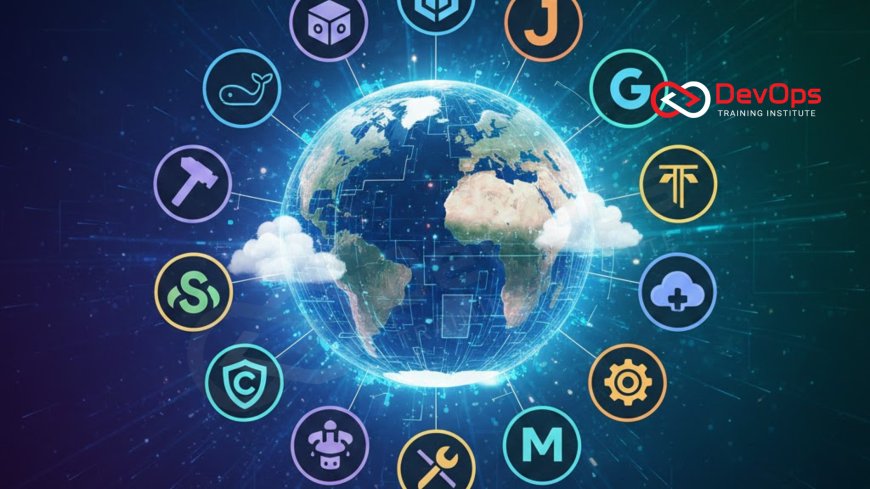
Introduction to Hybrid Cloud DevOps
As we navigate through 2025, the shift toward hybrid cloud environments has become a standard reality for modern enterprises. A hybrid cloud approach combines the security and control of on-premises private clouds with the immense scalability and innovation of public cloud providers. However, managing these split environments manually is nearly impossible. This is where DevOps comes in, providing the culture and the toolset needed to bridge the gap between different infrastructures, ensuring that software moves from development to production without friction.
The beauty of a well-implemented DevOps strategy in a hybrid setup is its ability to treat diverse hardware as a single, unified platform. By using specialized tools, teams can automate deployments, monitor performance, and secure data regardless of where the physical servers are located. In this guide, we will explore twenty essential tools that are currently shaping the industry. These solutions are categorized to help you understand their specific roles, from provisioning the underlying hardware to monitoring the final user experience in real time across your global network.
Infrastructure Provisioning and Management
In a hybrid environment, provisioning infrastructure must be consistent across both your local data center and your cloud accounts. Infrastructure as Code (IaC) is the practice that makes this possible. By defining your servers, networks, and databases in code, you ensure that every environment is a carbon copy of the previous one. This eliminates the "it works on my machine" problem and prevents configuration drift, where manual changes slowly make servers different from each other over time, leading to mysterious failures.
Terraform remains the leader in this space due to its massive ecosystem of providers, allowing you to manage AWS, Azure, and VMware resources within the same script. Another rising star is Pulumi, which allows engineers to use general-purpose programming languages like Python or TypeScript to define their hardware. This is a critical part of platform engineering as it enables teams to build internal self-service portals. These portals allow developers to spin up the resources they need safely, following all corporate security and budget rules automatically without waiting for an operations ticket.
Containerization and Orchestration Excellence
Containers are the fundamental unit of the modern cloud because they wrap an application and all its dependencies into a single package. This portability is vital for hybrid clouds, as it allows a developer to build a container on their laptop, test it on a local server, and then deploy it to a public cloud cluster with absolute confidence that it will behave exactly the same way. Docker paved the way for this revolution, but Kubernetes is now the undisputed king of managing these containers at scale.
Kubernetes acts as the operating system for your hybrid cloud, handling the scheduling, scaling, and health of your applications. It can automatically move workloads between your private data center and the public cloud based on your specific needs. To manage these complex clusters, many teams are turning to gitops methodologies. By using Git as the single source of truth for your cluster state, you can ensure that your live environment always matches your code. This approach makes audits easier and rollbacks as simple as reverting a single commit in your repository.
Automated CI/CD and Delivery Pipelines
Continuous Integration and Continuous Deployment (CI/CD) pipelines are the engines that drive modern software delivery. These pipelines automate the building, testing, and deployment of code every time a developer makes a change. In a hybrid setup, your pipeline must be smart enough to run tests in a secure local environment while perhaps deploying the final product to a global cloud network. Jenkins remains a powerhouse here due to its thousands of plugins, while GitHub Actions and GitLab CI/CD provide a more integrated experience.
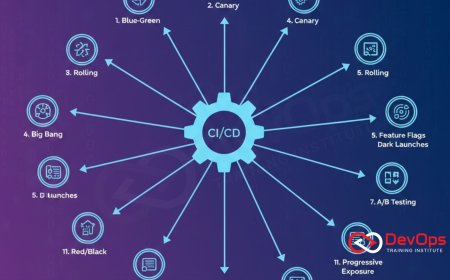
To reduce the risk of breaking your production environment, advanced teams use specific deployment strategies. For example, a canary release allows you to roll out a new feature to just a tiny percentage of your users first. If no errors are detected, the system automatically expands the rollout. This level of automation ensures high availability and protects the user experience. By automating these steps, teams can release multiple times a day instead of once a month, giving them a significant competitive advantage in a fast-moving digital economy that demands constant innovation.
Table: Top 20 DevOps Tools for Hybrid Cloud
| Tool Category | Specific Tools | Hybrid Cloud Primary Function |
|---|---|---|
| Infrastructure (IaC) | Terraform, Pulumi, OpenTofu | Provisioning resources across local and public clouds. |
| Orchestration | Kubernetes, Nomad, Rancher | Managing containerized workloads in unified clusters. |
| CI/CD Pipelines | Jenkins, GitHub Actions, GitLab CI | Automating builds and cross-environment deploys. |
| Configuration | Ansible, Chef, Puppet | Standardizing server settings across different hardware. |
| Observability | Prometheus, Grafana, Datadog | Real-time monitoring of metrics from all environments. |
| Log Management | ELK Stack, Splunk, Loki | Centralizing logs for unified troubleshooting. |
| GitOps | ArgoCD, Flux | Automating cluster state sync with Git repositories. |
Observability and Unified Monitoring
Maintaining a hybrid cloud is like managing two different worlds at once. To keep them running smoothly, you need a single pane of glass that shows you the health of every component. Monitoring tells you if a system is up or down, but observability allows you to understand why something is happening by looking at logs, metrics, and traces. Understanding the observability of your system is crucial because it helps you find the "needle in the haystack" when a complex cross-cloud transaction fails.
Prometheus has become the industry standard for collecting metrics, while Grafana provides the beautiful dashboards that teams use to visualize data. For enterprises, Datadog and Dynatrace offer AI-powered insights that can predict a failure before it even occurs. These tools are essential because they provide the data needed to make informed decisions about scaling and resource allocation. By having a unified view, you can identify if a performance bottleneck is caused by a slow local database or a network delay in the public cloud, allowing your team to fix the right problem quickly.
Security Integration and Compliance
Security in a hybrid environment is significantly more complex than in a single-cloud setup. You must protect data as it travels over the public internet between your data center and the cloud, and you must ensure that your security policies are identical everywhere. This is the core goal of DevSecOps. By automating security scans and compliance checks within your pipeline, you ensure that vulnerabilities are caught early. This shift left approach prevents insecure code from ever reaching your production servers.
Implementing devsecops involves using tools like Snyk for dependency scanning and HashiCorp Vault for secrets management. Vault is particularly useful in hybrid setups as it provides a single, secure way to manage passwords and API keys for both local and cloud services. This prevents developers from hardcoding sensitive information into their scripts. Furthermore, automated compliance tools can regularly audit your servers to ensure they meet industry standards like SOC2 or HIPAA, providing a continuous audit trail that satisfies regulators without manual effort.
Cloud Cost Management and Optimization
Hybrid cloud costs can spiraled out of control if you are not careful. You might be paying for cloud servers that are sitting idle while your local hardware is at maximum capacity. This is where finops becomes a critical part of the DevOps journey. FinOps is a cultural practice that brings financial accountability to the variable spend of the cloud, allowing engineering, finance, and business teams to work together to optimize every dollar spent on infrastructure.
Tools like Kubecost and CloudZero provide granular visibility into exactly how much each microservice is costing you. They can identify "zombie" resources that are no longer used but are still being billed. In 2025, these tools are increasingly using AI to provide rightsizing recommendations, telling you exactly which cloud instances can be made smaller without affecting performance. By managing costs proactively, organizations can reinvest those savings into new features and innovations, ensuring that the hybrid cloud remains a source of business value rather than a financial burden.
Ensuring Resilience and Performance
In a hybrid world, the network is often the weakest link. If the connection between your local office and your cloud provider fails, your application could crash. To prevent this, teams must design for failure. This involves using circuit breakers, retries, and high-availability configurations. A proactive way to test this is through chaos engineering, which involves deliberately injecting faults into your system—like shutting down a cloud region—to see if your application stays alive.
Tools like Gremlin or AWS Fault Injection Simulator allow you to run these experiments safely. They help you uncover hidden weaknesses in your architecture before they cause a real outage. Additionally, for safe updates, many teams use feature flags. Feature flags allow you to deploy new code but keep it hidden from users until you are ready to turn it on. This decoupling of deployment from release provides an ultimate safety net, as you can instantly turn off a buggy feature without rolling back the entire application, maintaining a smooth experience for all your customers.
- Automated Testing: Using tools like Selenium and Cypress to verify code quality at every step of the journey.
- Service Mesh: Implementing Istio or Linkerd to manage secure communication between services across environments.
- Compliance as Code: Using OPA (Open Policy Agent) to enforce business and security rules automatically in your pipelines.
- Shift-Left Strategies: Moving testing and security earlier in the lifecycle to catch bugs when they are cheapest to fix.
Conclusion
Navigating the complexities of a hybrid cloud environment in 2025 requires a strategic combination of culture and technology. The Top 20 DevOps Tools for Hybrid Cloud Environments highlighted in this guide provide the foundation for building a resilient, secure, and cost-effective infrastructure. By embracing Infrastructure as Code with Terraform, Orchestration with Kubernetes, and Observability with Prometheus, organizations can eliminate the silos between local and cloud teams. We have explored how DevSecOps protects your data, how FinOps manages your budget, and how Chaos Engineering ensures your system can withstand the unexpected. These tools are not just technical implementations; they are the enablers of business agility. As you continue your DevOps journey, remember that the most successful teams are those that prioritize automation and continuous learning. By implementing these professional practices and choosing the right tools for your specific needs, you can transform your hybrid cloud into a powerful engine for growth, delivering high-quality software to your users faster and more reliably than ever before.
Frequently Asked Questions
What is a hybrid cloud environment?
A hybrid cloud combines on-premises private servers with public cloud services from providers like AWS or Azure to share data and applications.
Why is Terraform popular for hybrid clouds?
Terraform allows you to manage diverse infrastructure across different cloud providers and local data centers using a single, consistent coding language.
What is the role of Kubernetes in a hybrid setup?
Kubernetes orchestrates containerized applications, making it easy to move and scale workloads across local servers and public cloud environments seamlessly.
How does GitOps improve deployment safety?
GitOps uses Git as the single source of truth, ensuring that any change to infrastructure or applications is version-controlled and easily reversible.
What is the difference between monitoring and observability?
Monitoring tracks known metrics to see if a system is healthy, while observability uses logs and traces to help you understand why errors occur.
How can I control hybrid cloud costs?
By using FinOps tools like Kubecost, you can get granular visibility into spending and receive automated recommendations for rightsizing your cloud resources.
What is a canary release strategy?
A canary release involves deploying new software to a small group of users first to verify stability before rolling it out to everyone.
Why should I use feature flags?
Feature flags allow you to turn specific features on or off without redeploying code, enabling safer testing and faster rollouts in production.
What is chaos engineering?
Chaos engineering is the practice of deliberately causing small failures in a system to find and fix weaknesses before a major outage happens.
How do I integrate security into my DevOps pipeline?
By adopting DevSecOps practices and using automated tools to scan code for vulnerabilities and secrets at every stage of the delivery cycle.
Is Jenkins still relevant for hybrid clouds?
Yes, Jenkins remains highly relevant due to its massive plugin ecosystem which allows it to integrate with almost any legacy or cloud tool.
What is platform engineering?
Platform engineering involves building internal tools and automated platforms that help developers manage infrastructure and deployments themselves safely and quickly.
Can I automate compliance audits?
Yes, by using compliance-as-code tools, you can continuously monitor your systems against regulatory standards and generate automated reports for your audits.
What is the benefit of using containers?
Containers provide a consistent environment for applications, ensuring they run the same way on a developer's laptop as they do in the cloud.
How does shift-left testing help my team?
Shift-left testing catches bugs and security issues earlier in the development process, making them much faster and cheaper to fix than later on.
What's Your Reaction?
 Like
0
Like
0
 Dislike
0
Dislike
0
 Love
0
Love
0
 Funny
0
Funny
0
 Angry
0
Angry
0
 Sad
0
Sad
0
 Wow
0
Wow
0

![100+ Azure DevOps Interview Questions and Answers [Updated 2025]](https://www.devopstraininginstitute.com/blog/uploads/images/202509/image_140x98_68c40aa9a3834.jpg)





![Future Scope of DevOps Careers in Pune [Updated 2025]](https://www.devopstraininginstitute.com/blog/uploads/images/202510/image_140x98_68e3a84652312.jpg)