




![Kong Interview Preparation Guide [2025]](https://www.devopstraininginstitute.com/blog/uploads/images/202509/image_430x256_68dbb95326997.jpg)




10 Leading DevOps Platforms for Enterprise Scaling
Discover the 10 most powerful DevOps platforms used by Fortune 500 companies in 2025. In-depth comparison of GitLab, GitHub Enterprise, Jenkins X, Harness, CircleCI, ArgoCD, Spacelift, AWS Developer Tools, Azure DevOps, and Google Cloud Deploy with real enterprise use cases, pricing insights, strengths, weaknesses, and migration tips.
Introduction
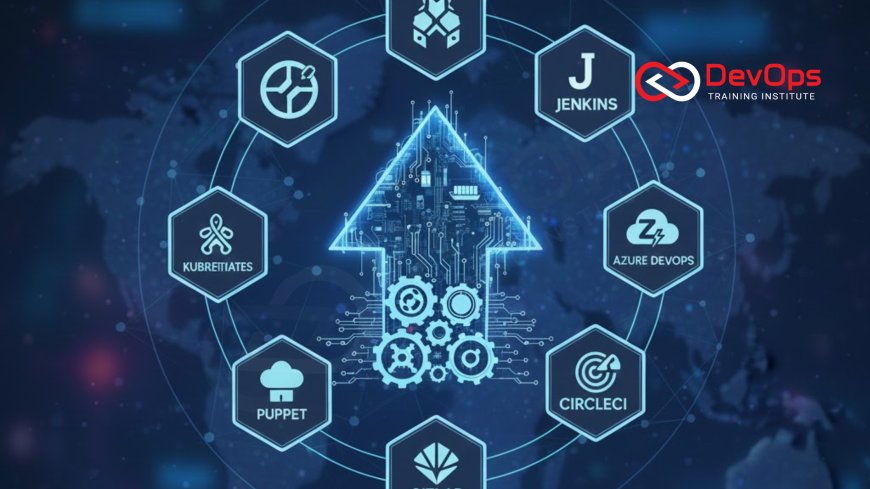
Scaling DevOps beyond a few teams requires more than open-source tools duct-taped together. In 2025, enterprises demand platforms that deliver governance, auditability, security, and developer experience at thousands of deployments per day without sacrificing velocity. The ten platforms below dominate boardroom conversations at banks, retailers, healthcare giants, and tech leaders because they solve the hardest problems at scale: policy enforcement, multi-cloud consistency, compliance reporting, and unified visibility. Whether you’re standardizing 200+ teams or replacing a fragile Jenkins setup, this comparison helps you pick the right long-term platform. Many of these integrate natively with AWS services like SQS, CloudWatch, and EKS for end-to-end visibility.
1. GitLab Ultimate – The All-in-One Leader
GitLab offers the most complete DevOps features in a single product: source code, CI/CD, security scanning, container registry, Terraform management, feature flags, and analytics.
- Built-in SAST, DAST, dependency scanning — no third-party plugins
- Enterprise Agile planning with Epics, Roadmaps, OKRs
- Compliance frameworks (SOC2, HIPAA, FedRAMP) out of the box
- Auto DevOps and Review Apps for instant environments
- GitLab Duo (AI) for code suggestions and pipeline generation
- Scales to 50,000+ users on a single instance
Best for: Organizations wanting one platform instead of ten.
2. GitHub Enterprise + Actions – Developer Experience King
GitHub dominates mindshare and talent attraction. With Actions, Codespaces, Copilot Enterprise, and Advanced Security, it’s now a complete enterprise platform.
- Copilot writes 40–60% of code in many enterprises
- Dependabot and CodeQL for supply-chain security
- Enterprise-grade RBAC, SAML, SCIM, audit logs
- GitHub Projects for portfolio management
- Native SQS integration via Actions
Best for: Companies prioritizing developer happiness and AI-assisted workflows.
3. Jenkins X / Harness Continuous Delivery – Next-Gen CD
Harness pioneered “Continuous Verification” using machine learning to auto-rollback bad deploys. Jenkins X brings GitOps to Jenkins users.
- 24/7 verification with Datadog, Prometheus, AppDynamics
- Policy-as-code with OPA/Gatekeeper
- Canary & blue-green with zero-downtime
- Cost analytics per pipeline and service
- Jenkins X offers preview environments on every PR
Best for: Enterprises needing intelligent, safe deployments.
4. CircleCI Enterprise – Speed + Security
Known for blazing-fast builds, CircleCI added enterprise features like self-hosted runners, IP ranges, and SOC2 Type II compliance.
- Orbs marketplace for reusable configs
- Insights dashboard with DORA metrics
- Runner on EKS or VM for regulated workloads
- SSO, audit logs, role-based access
Best for: Teams obsessed with build speed and analytics.
5. ArgoCD + Flux – Pure GitOps Platforms
ArgoCD remains the gold standard for Kubernetes GitOps; Flux v2 is catching up fast.
- Declarative, audit-ready deployments
- Multi-cluster, multi-tenant support
- Rollback with git revert
- Perfect complement to Amazon EKS
Best for: Kubernetes-first organizations embracing GitOps culture.
6. Spacelift – Terraform at Enterprise Scale
The leading Terraform management layer with policy, drift detection, and custom workflows.
- Run triggers, approvals, and notifications
- Stack dependencies and visual graphs
- OpenTofu support day one
- Audit everything, integrate with ServiceNow
Best for: Companies with massive Terraform estates.
7. AWS Developer Tools Suite
CodeCommit, CodeBuild, CodeDeploy, CodePipeline, and CloudFormation/CDK — all native, pay-as-you-go.
- Deep integration with CloudWatch alarms
- Blue/green deployments on ECS/EKS
- Cost tightly controlled via IAM
- CDK for real language IaC
Best for: AWS-first or AWS-only enterprises.
8. Azure DevOps – Microsoft Ecosystem Powerhouse
Boards, Repos, Pipelines, Test Plans, Artifacts — everything in one product loved by .NET and Windows teams.
- Unlimited private repos and pipeline minutes
- YAML pipelines with templates
- Built-in wiki and work tracking
- Excellent dashboard integration via Power BI
Best for: Microsoft-centric enterprises.
9. Google Cloud Deploy + Cloud Build
Fully managed CI/CD with delivery pipelines to GKE, Cloud Run, Anthos.
- Built-in Skaffold integration
- Progressive delivery controls
- Tight Anthos and multi-cloud support
Best for: Google Cloud or Anthos customers.
10. JFrog Platform – Artifacts + Security
Complete DevOps platform with Artifactory, Xray (security), Pipelines, and Distribution.
- Universal repository (Docker, npm, Maven, etc.)
- SBOM generation and vulnerability scanning
- Edge distribution for global CD
Best for: Organizations needing enterprise-grade artifact management.
Enterprise DevOps Platform Comparison Table
| Platform | Best Strength | Pricing Model | Compliance Ready |
|---|---|---|---|
| GitLab Ultimate | All-in-one | Per user | Yes |
| GitHub Enterprise | Developer joy | Per user | Yes |
| Harness CD | Safe deploys | Consumption | Yes |
| Spacelift | Terraform scale | Per resource | Yes |
| AWS Tools | Native AWS | Pay-as-you-go | Yes |
Conclusion
The era of “best-of-breed everything” is giving way to mature, opinionated platforms that reduce tool sprawl and cognitive load. GitLab and GitHub lead for most enterprises, while Harness and Spacelift dominate niche excellence. Choose based on your primary cloud, compliance needs, and developer experience goals — then commit fully. The cost of running five half-integrated tools almost always exceeds one great platform.
Frequently Asked Questions
Which platform has the fastest adoption in 2025?
GitLab Ultimate — many enterprises are consolidating 5–8 tools into one.
Is open-source still viable at enterprise scale?
Yes with commercial support (GitLab, Harness, Spacelift) or managed services (EKS, AKS).
Should we stay with Jenkins?
Only if heavily customized. Most are migrating to GitLab, Harness, or cloud-native.
Which is cheapest long-term?
Usually the one your team adopts fastest — developer productivity dwarfs license costs.
Can I mix platforms?
Yes, but avoid >3 core tools to prevent complexity debt.
What's Your Reaction?
 Like
0
Like
0
 Dislike
0
Dislike
0
 Love
0
Love
0
 Funny
0
Funny
0
 Angry
0
Angry
0
 Sad
0
Sad
0
 Wow
0
Wow
0


![100+ Azure DevOps Interview Questions and Answers [Updated 2025]](https://www.devopstraininginstitute.com/blog/uploads/images/202509/image_140x98_68c40aa9a3834.jpg)





![Future Scope of DevOps Careers in Pune [Updated 2025]](https://www.devopstraininginstitute.com/blog/uploads/images/202510/image_140x98_68e3a84652312.jpg)