Free DevOps eBooks and Study Material for Pune Learners
Free official DevOps eBooks and study material for Pune learners: Pro Git, Kubernetes, Docker, Terraform, SRE books, plus a 12-week study plan.
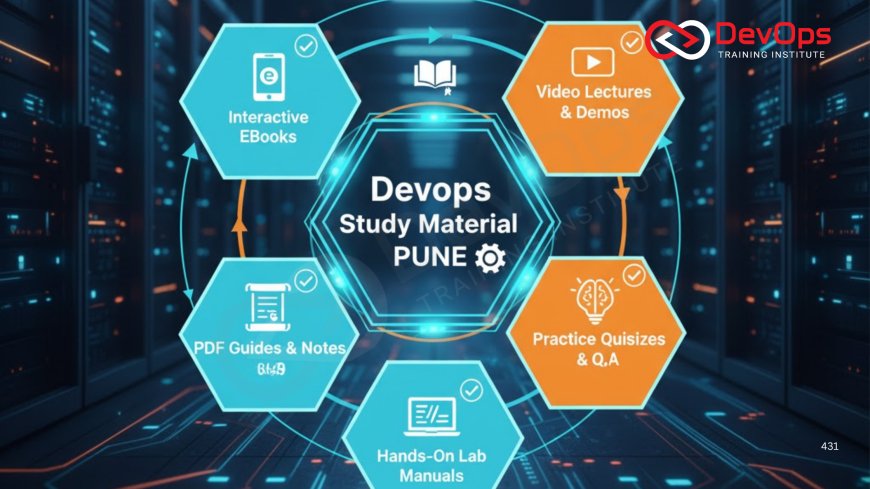
The best DevOps study material for a learner in Pune is free and official: the Pro Git book, Kubernetes and Docker documentation, the Linux Foundation's free Introduction to Kubernetes course, Terraform tutorials, Microsoft Learn and Google's free SRE books. Read one source per topic, then practise every chapter in a lab.
This page lists those sources, what each one is good for, and an order to study them in. Facts about tools and exams were checked against the publishers' own pages in November 2026.
Key takeaways
- Pro Git, by Scott Chacon and Ben Straub, is free to read online and is licensed CC BY-NC-SA 3.0. The Git project page also links a PDF and an EPUB.
- Google publishes three SRE books free to read online. The second edition of Site Reliability Engineering is sold through Google Books and is not free online.
- The Linux Foundation's Introduction to Kubernetes (LFS158) is a free, self-paced course with about 15 to 20 hours of material and 90 days of access.
- Kubernetes currently supports versions 1.35, 1.36 and 1.37. Any book that shows a much older version will have commands or API fields that no longer work.
- Reading is not enough. Each chapter should end with something you built, broke and fixed in a lab.
- Avoid pirated PDFs. They are usually outdated and may carry malware. The free official sources below are better and current.
How to use study material for DevOps
DevOps is a set of practices plus a toolchain, so no single book covers it. A workable approach is to pick one trusted source for each layer, read it in small pieces, and run the commands as you go. If you want the big picture first, start with what DevOps is, then come back here for depth.
Our other lists cover adjacent ground. For printed books see 20 DevOps books to read for skill growth, and for videos, courses and communities see Top 20 DevOps learning resources. This page stays with free eBooks, official documentation and certification preparation material.
Free official study material by topic
| Topic | Source | What it gives you |
|---|---|---|
| Git | Pro Git (git-scm.com/book) | The full book online, free, with PDF and EPUB downloads |
| Containers | Docker documentation | Install guides, Dockerfile reference, Compose and build documentation |
| Kubernetes | kubernetes.io documentation and LFS158 | Concepts, tasks, tutorials, plus a free introductory course |
| CI/CD | Jenkins and GitHub Actions documentation | Installation, pipeline syntax, workflow concepts |
| Infrastructure as code | Terraform documentation and tutorials | Hands-on tutorials and Terraform Associate preparation |
| Cloud | Microsoft Learn and AWS documentation | Self-paced modules and service guides |
| Monitoring | Prometheus documentation | Architecture, data model, alerting |
| Reliability | Google SRE books (sre.google/books) | Three free books on running production systems |
Git and Linux first
Pro Git for version control
Pro Git is the most useful free DevOps eBook because Git underlies pipelines, GitOps and code review. The git-scm.com page describes it as the entire book, written by Scott Chacon and Ben Straub and published by Apress, with online translations. Read the chapters on branching, remotes and Git internals first. Then practise with a throwaway repository:
git init demo && cd demo
git switch -c feature/readme
echo "hello" > README.md
git add README.md
git commit -m "Add readme"
git log --oneline --graph --all
Our list of 25 Git commands every DevOps engineer must know works well as a checklist alongside the book.
Linux practice material
Most DevOps work happens on Linux servers, so file permissions, processes, services and networking come before any tool. The man pages on your own machine are always current. Pair them with top 20 Linux commands for DevOps engineers and 12 essential Linux permissions. Use a virtual machine or a cloud free tier so a mistake costs nothing.
Containers and Kubernetes
Docker's documentation is the reference for images, Dockerfiles and Compose. Start with a single command that proves your install works, then containerise a small app of your own:
docker run --rm hello-world
docker build -t myapp:1.0 .
docker images
For Kubernetes, use kubernetes.io as the primary text. The Linux Foundation's free LFS158 course covers the origin, architecture and main components of Kubernetes, setting up a cluster with Minikube, and running applications. The page lists 17 chapters, about 15 to 20 hours of material, and 90 days of access, and you log in through the Linux Foundation portal to enrol.
Check the version of every Kubernetes book you read. The project currently supports 1.35, 1.36 and 1.37, with 1.37 the newest minor release. Core objects such as Pods, Deployments and Services have been stable for years, so older books still teach concepts well. Where a command behaves differently, trust the documentation for your cluster version. A quick sanity routine once you have a cluster:
kubectl version
kubectl get nodes
kubectl create deployment web --image=nginx
kubectl get pods -o wide
More practice commands are in 10 Kubernetes commands every DevOps engineer uses daily.
CI/CD, infrastructure as code and monitoring
CI/CD documentation
The Jenkins documentation says Jenkins requires Java 21 or later, and its Linux install steps use OpenJDK 21. Read that page before following an older tutorial that installs Java 11 or 17. The Jenkins download page lists 2.580.2 as the current LTS. For hosted pipelines, the GitHub Actions documentation explains the model: a workflow is triggered by an event, contains jobs, and each job runs on a runner. Workflow files are YAML stored in .github/workflows. Background reading on why pipelines matter is in why CI/CD is the backbone of DevOps.
Terraform tutorials
HashiCorp publishes tutorials and a Terraform Associate (004) preparation path with a learning path, an exam content list and sample questions. Even if you never sit the exam, the content list is a tidy syllabus. The three commands you will type most are:
terraform init
terraform plan
terraform apply
The current Terraform release listed on the install page is 1.17.2. For tool choices beyond Terraform, see top 10 IaC tools every DevOps engineer must learn.
Monitoring
The Prometheus overview describes it as an open-source toolkit for monitoring and alerting, built from a server that scrapes and stores time series data, client libraries, a push gateway for short-lived jobs, exporters and an Alertmanager. Learn that architecture before you open Grafana.
Cloud and reliability reading
Microsoft Learn offers self-directed modules and learning paths, including role-based career paths. AWS publishes service documentation and exam guides on its certification pages. Choose one cloud first and finish a small project on it before you compare providers.
For reliability thinking, Google's SRE site lists four books. Building Secure and Reliable Systems, The Site Reliability Workbook and the original Site Reliability Engineering book are free to read online. The second edition of Site Reliability Engineering is offered through Google Books. The workbook is the most practical of the set, because it works through examples such as service level objectives and alerting.
Certification preparation material
Only the certifier's own page is a reliable source for exam facts, because formats change. At the time of checking:
| Exam | Format | Validity |
|---|---|---|
| Certified Kubernetes Administrator (CKA) | Online, proctored, performance-based, command-line tasks, 2 hours; based on Kubernetes v1.37 | 2 years |
| AWS Certified DevOps Engineer Professional | 75 multiple choice or multiple response questions, 180 minutes | 3 years |
| HashiCorp Terraform Associate | Current exam is version 004, with a prep path, content list and sample questions | See HashiCorp |
AWS recommends two or more years of experience provisioning, operating and managing AWS environments for the professional exam. Treat that as a signal to build projects first. Our overview of top 20 DevOps certifications helps you pick one.
A 12-week study plan using these sources
- Weeks 1 and 2: Linux basics and Pro Git. Finish with a small repository pushed to a remote.
- Weeks 3 and 4: Docker documentation. Containerise a small web app and write a Dockerfile.
- Weeks 5 and 6: LFS158 and the Kubernetes tutorials. Deploy the app to Minikube.
- Weeks 7 and 8: Build a pipeline in Jenkins or GitHub Actions that builds and tests the image.
- Weeks 9 and 10: Terraform tutorials. Provision a virtual machine or a storage bucket on one cloud.
- Weeks 11 and 12: Add Prometheus metrics, read one SRE workbook chapter, and write a short runbook.
The pace is an example, not a promise. Full-time learners may go faster and working professionals slower. The 10 DevOps roadmaps for beginners post compares other sequences.
Common mistakes when studying from eBooks
- Reading without running anything. Commands you only read about fade within days.
- Following a tutorial that targets an old version. Check the version before you copy configuration.
- Collecting many PDFs and finishing none. One book per topic is enough.
- Downloading unofficial copies of paid books. Use the free official sources listed here.
- Skipping the documentation search habit. Knowing where to look an answer up is a real skill, so keep your notes and bookmarks organised.
Study support in Pune
If self-study stalls, structured help is available. DevOps Training Institute runs classroom batches at its Kharadi centre in Pune and live online batches. Course details are on the DevOps training in Pune page, and the Docker training page covers the container material above. For questions that interviewers ask once you have studied, use the 200+ DevOps interview questions guide.
FAQs
Are there good free DevOps eBooks?
Yes. Pro Git is free online and as PDF and EPUB, Google's SRE books are free to read online (except the second edition of the original), and the official Kubernetes, Docker and Terraform documentation is free and current.
Which DevOps book should a beginner read first?
Start with Pro Git, because every other tool in the pipeline depends on version control. Follow it with the Docker documentation and the Linux Foundation's free Introduction to Kubernetes course.
Is the Linux Foundation Kubernetes course really free?
The LFS158 page lists it as free. It is self-paced, has 17 chapters, about 15 to 20 hours of material and 90 days of access, and requires a login to the Linux Foundation portal.
How do I know if a DevOps eBook is out of date?
Check the tool version it uses against the current release. Kubernetes supports 1.35, 1.36 and 1.37, and Jenkins now requires Java 21 or later. If the book names much older versions, use it for concepts and the documentation for commands.
Should I download pirated PDFs for exam preparation?
No. They are often outdated, can carry malware, and break publishers' terms. The certifiers' own preparation pages and the free official documentation are safer and current.
Can I learn DevOps in Pune only from books?
You can start that way, but DevOps needs labs. If you want a mentor, DevOps Training Institute offers classroom batches in Kharadi, Pune and live online batches.
Which certification material is free?
HashiCorp provides free Terraform Associate preparation tutorials with sample questions, and Microsoft Learn modules are self-directed. Exam registration is separate, so check each certifier's page for current terms.
References
- Pro Git book
- Google SRE books
- Kubernetes releases
- Linux Foundation, Introduction to Kubernetes (LFS158)
- Linux Foundation, CKA certification
- Jenkins download page
- Jenkins Linux installation guide
- GitHub Actions concepts
- HashiCorp Terraform Associate tutorials
- AWS Certified DevOps Engineer Professional
- Prometheus overview
- Microsoft Learn training
What's Your Reaction?
 Like
0
 Dislike
0
 Love
0
 Funny
0
 Angry
0
 Sad
0
 Wow
0